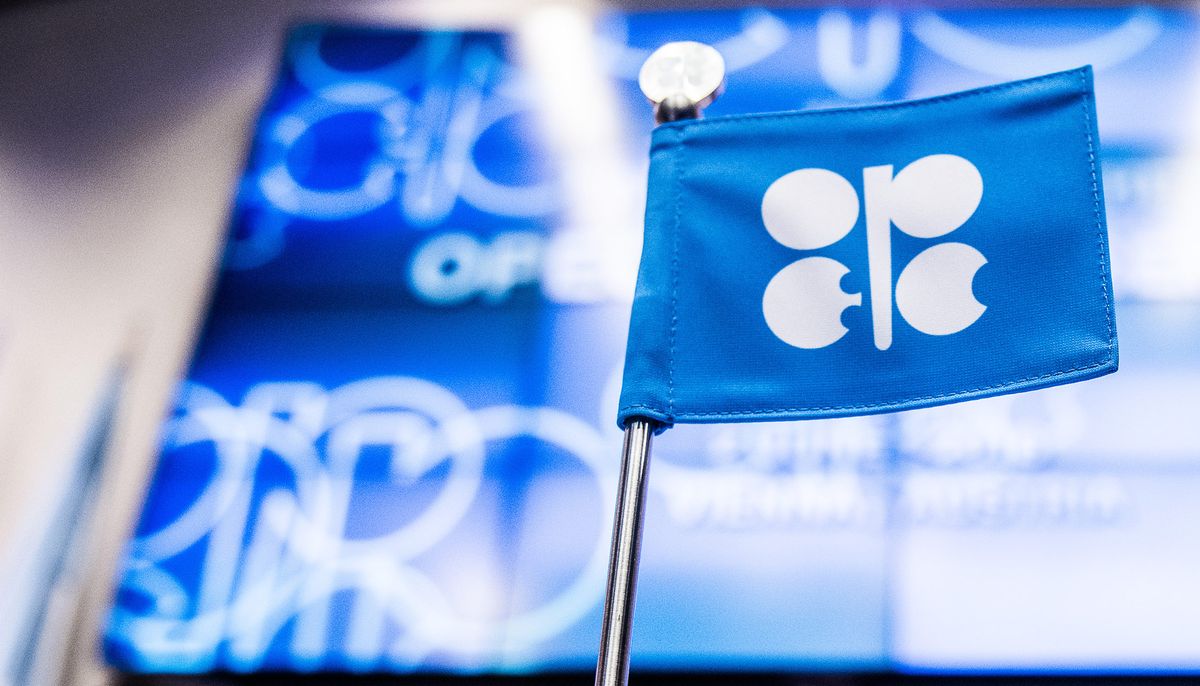
OPEC is the Organization of Petroleum Exporting Countries.
欧佩克(OPEC)是石油输出国组织(Organization of Petroleum Exporting Countries)的简称。
It was founded in Baghdad in 1960 and currently has 11 members. OPEC’s aim is to regulate the amount of oil that member nations produce and to keep prices at a steady rate. The countries get together twice a year and agree on how much oil each country is allowed to produce. OPEC’s headquarters are in Vienna, the capital of Austria.
该组织于1960年在巴格达成立,目前有11个成员国。欧佩克的宗旨是调节成员国的石油产量,并维持石油价格的稳定。各成员国每年举行两次会议,就每个国家的允许石油产量达成一致。欧佩克的总部位于奥地利首都维也纳。
Before OPEC was created, there were large oil companies that controlled the world’s oil production. They wanted to sell as much oil as possible and did not let governments influence their decisions. Oil-rich countries, especially in the Middle East, wanted more control. Later, Qatar, Indonesia, Libya, Algeria, Nigeria, Ecuador, Angola and the United Arab Emirates also became members.
在欧佩克成立之前,有一些大型石油公司控制着全球的石油生产。这些公司希望尽可能多地销售石油,不让各国政府影响其决策。石油资源丰富的国家,尤其是中东国家,希望获得更多控制权。后来,卡塔尔、印度尼西亚、利比亚、阿尔及利亚、尼日利亚、厄瓜多尔、安哥拉和阿拉伯联合酋长国也加入了该组织。
In the 1960s, OPEC did not have much power. This changed in 1973 when the third Arab-Israeli war started. The United States and a few European countries supported Israel. As a form of punishment, OPEC nations, influenced by the Arab countries, stopped selling oil to the West. Within the next six years, oil prices rose to ten times the price of the early 1970s. OPEC countries became rich with so-called petrodollars, while the West sank into a deep recession because they needed OPEC’s oil.
20世纪60年代,欧佩克并没有太大影响力。这种情况在1973年第三次阿以战争爆发时发生了改变。美国和一些欧洲国家支持以色列。作为一种惩罚手段,受阿拉伯国家影响,欧佩克成员国停止向西方出售石油。在接下来的六年里,石油价格涨到了20世纪70年代初的十倍。欧佩克国家凭借所谓的“石油美元”变得富有,而西方由于需要欧佩克的石油,陷入了严重的经济衰退。
In the aftermath of the energy crisis of the 1970s, western countries started looking for alternative forms of energy in order to become more independent from OPEC and the oil-producing nations. In 1986, oil prices dropped to the lowest rate in history. Oil-producing nations lost much of their income. In the 1980s and 1990s, OPEC’s power diminished, often because of conflicts and internal arguments, and because member states could not agree on production quotas. Some OPEC countries did not keep agreements and produced more oil, thus lowering prices.
20世纪70年代能源危机之后,西方国家开始寻找替代能源,以减少对欧佩克和石油生产国的依赖,实现更大程度的能源独立。1986年,石油价格跌至历史最低点。石油生产国的收入大幅减少。20世纪80年代和90年代,欧佩克的影响力逐渐减弱,这通常是由于冲突、内部分歧,以及成员国无法就产量配额达成一致。一些欧佩克成员国没有遵守协议,生产了更多石油,从而压低了油价。
After 2000, oil prices began to rise again and reached an all-time high in 2007. The financial crisis of 2007 and 2008 hit the world economy hard, and oil prices fell once again. Since the Arab Spring of 2011, prices have gone up and down several times.
2000年之后,石油价格再次开始上涨,并在2007年达到历史最高点。2007-2008年的金融危机严重冲击了全球经济,石油价格再次下跌。自2011年“阿拉伯之春”以来,石油价格经历了数次起伏。
Today, OPEC still controls about 60% of the world’s oil reserves and produces 40% of the world’s oil. Saudi Arabia is the most powerful member of the group, because it has the largest reserves. Even though there have been quarrels in the cartel in the last 5 decades, it remains a powerful organization.
如今,欧佩克仍控制着全球约60%的石油储量,并生产全球40%的石油。沙特阿拉伯是该组织中最有影响力的成员国,因为它拥有最庞大的石油储量。尽管在过去50年里,这个卡特尔组织内部曾出现过争执,但它仍然是一个具有影响力的组织。